Monsanto & Bayer = true
The Monsanto Company
was an American agrochemical
and agricultural biotechnology
corporation founded in 1901. In 2018, it was acquired by Bayer
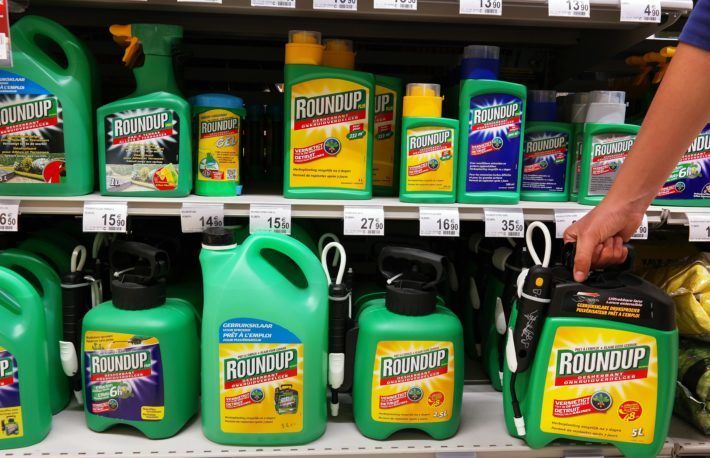
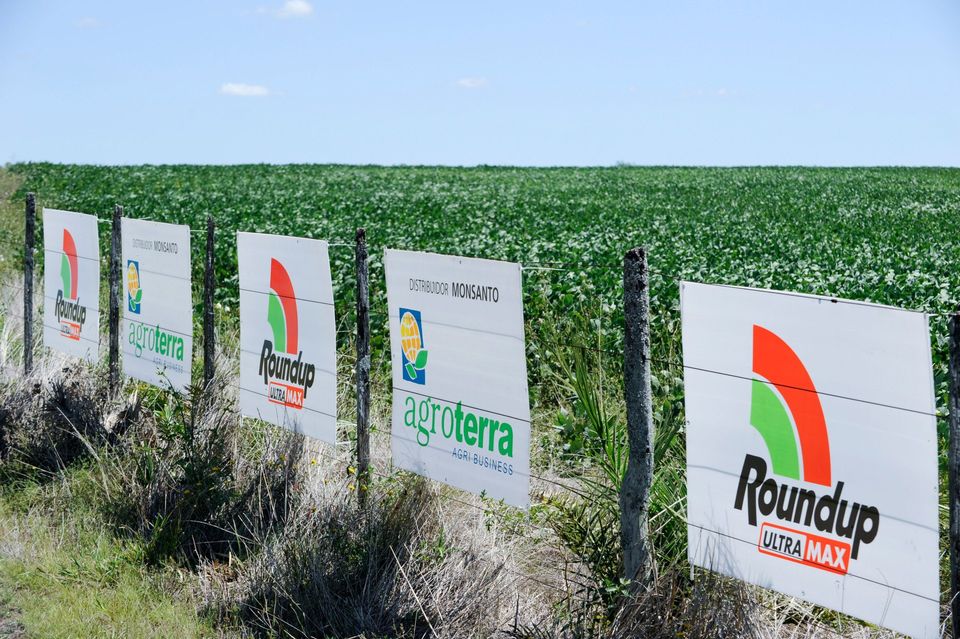
as part of its crop science division. It was headquartered in Creve Coeur, Missouri. Monsanto developed Roundup, a glyphosate-based herbicide, in the 1970s, and became a major producer of genetically engineered
crops.
Monsanto was one of four groups to introduce genes into plants in 1983, and was among the first to conduct field trials of genetically modified crops in 1987. It was one of the top 10 US chemical companies until it divested most of its chemical businesses between 1997 and 2002, through a process of mergers and spin-offs that focused the company on biotechnology. Monsanto was one of the first companies to apply the biotechnology industry business model to agriculture, using techniques developed by biotech drug companies. In this business model, companies recoup R&D expenses by exploiting biological patents.
Monsanto's roles in agricultural changes, biotechnology products, lobbying of government agencies, and roots as a chemical company, resulted in controversies. The company once manufactured controversial products such as the insecticide DDT, PCBs, Agent Orange, and recombinant bovine growth hormone. Its seed patenting model was criticized as biopiracy and a threat to biodiversity as invasive species.
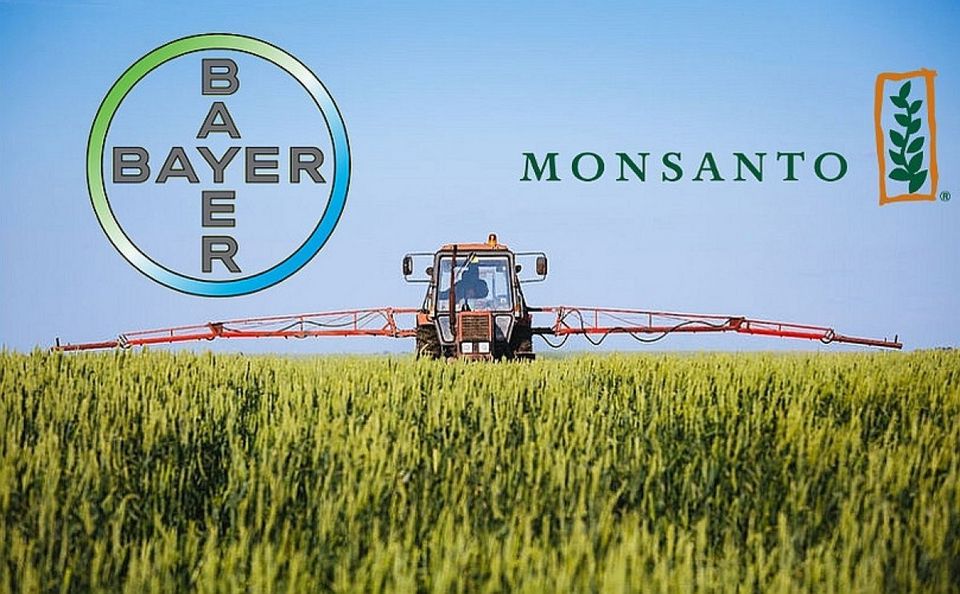
In September 2016, Bayer announced its intent to acquire Monsanto for US$66 billion. After gaining US and EU regulatory approval, the sale was completed on June 7, 2018 where the name Monsanto was no longer used, but Monsanto's previous product brand names were maintained. The company ranked 199th on the 2018 Fortune 500 of the largest United States corporations by revenue - Source
Monsanto was one of four groups to introduce genes into plants in 1983, and was among the first to conduct field trials of genetically modified crops in 1987. It was one of the top 10 US chemical companies until it divested most of its chemical businesses between 1997 and 2002, through a process of mergers and spin-offs that focused the company on biotechnology. Monsanto was one of the first companies to apply the biotechnology industry business model to agriculture, using techniques developed by biotech drug companies. In this business model, companies recoup R&D expenses by exploiting biological patents.
Monsanto's roles in agricultural changes, biotechnology products, lobbying of government agencies, and roots as a chemical company, resulted in controversies. The company once manufactured controversial products such as the insecticide DDT, PCBs, Agent Orange, and recombinant bovine growth hormone. Its seed patenting model was criticized as biopiracy and a threat to biodiversity as invasive species.
In September 2016, Bayer announced its intent to acquire Monsanto for US$66 billion. After gaining US and EU regulatory approval, the sale was completed on June 7, 2018 where the name Monsanto was no longer used, but Monsanto's previous product brand names were maintained. The company ranked 199th on the 2018 Fortune 500 of the largest United States corporations by revenue - Source
Bayer AG
is a German multinational
pharmaceutical
and life sciences
company and one of the largest pharmaceutical companies
in the world. Headquartered in Leverkusen, Bayer's areas of business include human and veterinary pharmaceuticals; consumer healthcare products; agricultural chemicals, seeds and biotechnology products. The company is a component of the Euro Stoxx 50
stock market index. Werner Baumann has been CEO since 2016.
Founded in Barmen in 1863 as a dyestuffs factory, Bayer's first and best-known product was aspirin. In 1898 Bayer trademarked the name heroin for the drug diacetylmorphine and marketed it as a cough suppressant and non-addictive substitute for morphine until 1910. Bayer also introduced phenobarbital; prontosil, the first widely used antibiotic and the subject of the 1939 Nobel Prize in Medicine; the antibiotic Cipro (ciprofloxacin); and Yaz (drospirenone) birth control pills.
In 1925 Bayer was one of six chemical companies that merged to form IG Farben, the world's largest chemical and pharmaceutical company. The Allied Control Council seized IG Farben after World War II, because of its role in the Nazi war effort and involvement in the Holocaust, which included using slave labour from concentration camps and the purchase of humans for dangerous medical testing. It was split into its six constituent companies in 1951, then split again into three: BASF, Bayer and Hoechst.
Bayer played a key role in the Wirtschaftswunder in post-war West Germany, quickly regaining its position as one of the world's largest chemical and pharmaceutical corporations. In 2006 the company acquired Schering, in 2014 it acquired Merck & Co.'s consumer business, with brands such as Claritin, Coppertone and Dr. Scholl's, and in 2018 it acquired Monsanto, a leading producer of genetically engineered crops, for $63 billion. Bayer CropScience develops genetically modified crops and pesticides- Source
Founded in Barmen in 1863 as a dyestuffs factory, Bayer's first and best-known product was aspirin. In 1898 Bayer trademarked the name heroin for the drug diacetylmorphine and marketed it as a cough suppressant and non-addictive substitute for morphine until 1910. Bayer also introduced phenobarbital; prontosil, the first widely used antibiotic and the subject of the 1939 Nobel Prize in Medicine; the antibiotic Cipro (ciprofloxacin); and Yaz (drospirenone) birth control pills.
In 1925 Bayer was one of six chemical companies that merged to form IG Farben, the world's largest chemical and pharmaceutical company. The Allied Control Council seized IG Farben after World War II, because of its role in the Nazi war effort and involvement in the Holocaust, which included using slave labour from concentration camps and the purchase of humans for dangerous medical testing. It was split into its six constituent companies in 1951, then split again into three: BASF, Bayer and Hoechst.
Bayer played a key role in the Wirtschaftswunder in post-war West Germany, quickly regaining its position as one of the world's largest chemical and pharmaceutical corporations. In 2006 the company acquired Schering, in 2014 it acquired Merck & Co.'s consumer business, with brands such as Claritin, Coppertone and Dr. Scholl's, and in 2018 it acquired Monsanto, a leading producer of genetically engineered crops, for $63 billion. Bayer CropScience develops genetically modified crops and pesticides- Source
Monsanto and Government relations
Monsanto regularly lobbied the US government with expenses reaching $8.8 million in 2008] and $6.3 million in 2011 $2 million was spent on matters concerning "Foreign Agriculture Biotechnology Laws, Regulations, and Trade". Some US diplomats in Europe at other times worked directly for Monsanto.
In 2009 Michael R. Taylor, food safety expert and former Monsanto VP for Public Policy became a senior advisor to the FDA Commissioner.
Monsanto is a member of the Washington D.C based Biotechnology Industry Organization (BIO), the world's largest biotechnology trade association, which provides "advocacy, business development, and communications services." Between 2010 and 2011 BIO spent a total of $16.43 million on lobbying.
California's 2012 Proposition 37 would have mandated the disclosure of genetically modified crops used in the production of California food products. Monsanto spent $8.1 million opposing passage, making it the largest contributor against the initiative. The proposition was rejected by a 53.7% majority. Labeling is not required in the US.
The Monsanto Company Citizenship Fund aka Monsanto Citizenship Fund is a political action committee that donated over $10 million to various candidates from 2003 to 2013.
As of October 2013, Monsanto and DuPont Co. continued backing an anti-labeling campaign, spending roughly $18 million. The state of Washington, along with 26 other states, made proposals in November to require GMO labeling.
In the US regulatory environment, many individuals move back and forth between positions in the public and private sectors, including at Monsanto. Critics argued that the connections between the company and the government allowed Monsanto to obtain favorable regulations at the expense of consumer safety. Supporters of the practice point to the benefits of competent and experienced individuals in both sectors and to the importance of appropriately managing potential conflicts of interest.
United Kingdom
During the late 1990s, Monsanto lobbied to raise permitted glyphosate levels in soybeans and was successful in convincing Codex Alimentarius and both the UK and US governments to lift levels 200 times to 20 milligrams per kilogram of soya.When asked how negotiations with Monsanto were conducted, Lord Donoughue, then the Labour Party Agriculture minister in the House of Lords, stated that all information relating to the matter would be "kept secret". During the 24 months prior to the 1997 British election Monsanto representatives had 22 meetings at the departments of Agriculture and the Environment.
Stanley Greenberg, an election advisor to Tony Blair, later worked as a Monsanto consultant. Former Labour spokesperson David Hill, became Monsanto's media adviser at the lobbying firm Bell Pottinger. The Labour government was challenged in Parliament about "trips, facilities, gifts and other offerings of financial value provided by Monsanto to civil servants", but only acknowledged that Department of Trade and Industry had two working lunches with Monsanto. Peter Luff, then a Conservative Party MP and Chairman of the Agriculture Select Committee, received up to £10,000 a year from Bell Pottinger on behalf of Monsanto.
In January 2011, WikiLeaks documents suggested that US diplomats in Europe responded to a request for help from the Spanish government. One report stated, "In addition, the cables show US diplomats working directly for GM companies such as Monsanto. 'In response to recent urgent requests by [Spanish rural affairs ministry] state secretary Josep Puxeu and Monsanto, post requests renewed US government support of Spain's science-based agricultural biotechnology position through high-level US government intervention.'" The leaked documents showed that in 2009, when the Spanish government's policy approving MON810 was under pressure from EU interests, Monsanto's Director for Biotechnology for Spain and Portugal requested that the US government support Spain on the matter.
The leaks indicated that Spain and the US had worked closely together to "persuade the EU not to strengthen biotechnology laws". Spain was viewed as a key GMO supporter and a leading indicator of support across the continent. The leaks also revealed that in response to an attempt by France to ban MON810 in late 2007, then-US ambassador to France, Craig Roberts Stapleton, asked Washington to "calibrate a targeted retaliation list that [would cause] some pain across the EU", targeting countries that did not support the use of GM crops. This activity transpired after the US, Australia, Argentina, Brazil, Canada, India, Mexico and New Zealand had brought an action against Europe via the World Trade Organization
(WTO) with respect to the EU's banning of GMOs; in 2006, the WTO had ruled against the EU.
Monsanto was a member of EuropaBio, the leading biotechnology trade group in Europe. One of EuropaBio's initiatives is "Transforming Europe's position on GM food". It found "an urgent need to reshape the terms of the debate about GM in Europe". EuropaBio proposed the recruitment of high-profile "ambassadors" to lobby EU officials.
In September 2017 Monsanto lobbyists were banned from the European parliament after the Monsanto refused to attend a parliamentary hearing into allegations of regulatory interference.
Haiti
After the 2010 Haiti earthquake, Monsanto donated $255,000 for disaster relief and 60,000 seed sacks (475 tons) of hybrid (non-GM) corn and vegetable seeds worth $4 million. However, a Catholic Relief Services (CRS) rapid assessment of seed supply and demand for the five most common food security crops found that the Haitians had enough seed and recommended that imported seeds be introduced only on a small scale. Emmanuel Prophete, head of Haiti's Ministry of Agriculture's Service National Semencier (SNS), stated that SNS was not opposed to the hybrid maize seeds because they at least double yields. Louise Sperling, Principal Researcher at the International Center for Tropical Agriculture (CIAT) told HGW that she was not opposed to hybrids, but noted that most hybrids required extra water and better soils and that most of Haiti was not appropriate for hybrids.
Activists objected that some of the seeds were coated with the fungicides Maxim or thiram. In the United States, pesticides containing thiram are banned in home garden products because most home gardeners do not have adequate protection. Activists wrote that the coated seeds were handled in a dangerous manner by the recipients.
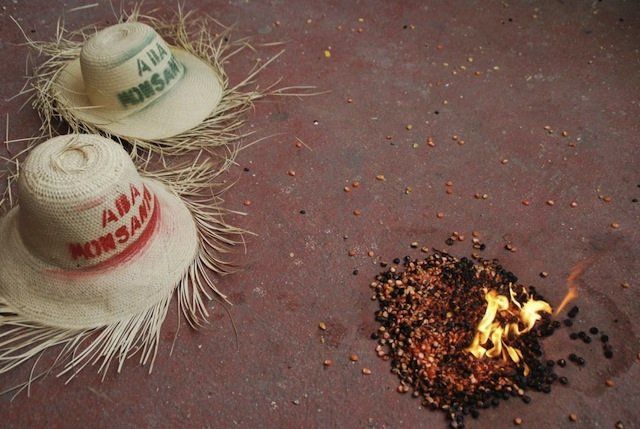
The donated seeds were sold at a reduced price in local markets. However, farmers feared that they were being given seeds that would "threaten local varieties" and an estimated 8,000–12,000 farmers attended a protest of the donation on June 4, 2010, organized by a Haitian farmers' association, the Peasant Movement of Papaye, where a small pile of seeds was symbolically burned - Source
In September 2017 Monsanto lobbyists were banned from the European parliament after the Monsanto refused to attend a parliamentary hearing into allegations of regulatory interference.
Haiti
After the 2010 Haiti earthquake, Monsanto donated $255,000 for disaster relief and 60,000 seed sacks (475 tons) of hybrid (non-GM) corn and vegetable seeds worth $4 million. However, a Catholic Relief Services (CRS) rapid assessment of seed supply and demand for the five most common food security crops found that the Haitians had enough seed and recommended that imported seeds be introduced only on a small scale. Emmanuel Prophete, head of Haiti's Ministry of Agriculture's Service National Semencier (SNS), stated that SNS was not opposed to the hybrid maize seeds because they at least double yields. Louise Sperling, Principal Researcher at the International Center for Tropical Agriculture (CIAT) told HGW that she was not opposed to hybrids, but noted that most hybrids required extra water and better soils and that most of Haiti was not appropriate for hybrids.
Activists objected that some of the seeds were coated with the fungicides Maxim or thiram. In the United States, pesticides containing thiram are banned in home garden products because most home gardeners do not have adequate protection. Activists wrote that the coated seeds were handled in a dangerous manner by the recipients.
The donated seeds were sold at a reduced price in local markets. However, farmers feared that they were being given seeds that would "threaten local varieties" and an estimated 8,000–12,000 farmers attended a protest of the donation on June 4, 2010, organized by a Haitian farmers' association, the Peasant Movement of Papaye, where a small pile of seeds was symbolically burned - Source